AI Quality Control in Manufacturing

Sylvia Williamson
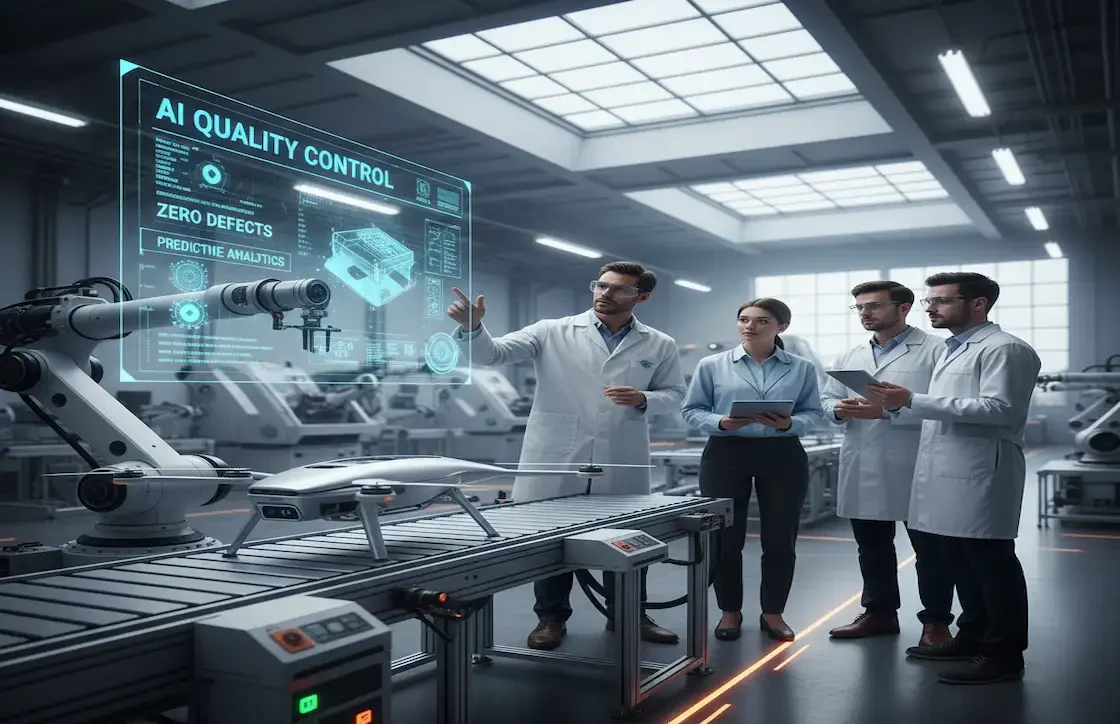
Manufacturing leaders today face unprecedented challenges. Quality demands are higher than ever, production schedules are tighter, and profit margins continue to shrink. Traditional quality control methods, while reliable, often fall short in today’s fast-paced manufacturing environment. This is where AI Quality Control in Manufacturing emerges as a game-changing solution that’s transforming how we approach production excellence.
As an AI Systems Automation Creator at CPWE.biz, I’ve witnessed firsthand how artificial intelligence is revolutionizing quality control processes across various manufacturing sectors. The integration of AI technologies isn’t just a futuristic concept—it’s happening right now, delivering measurable results for companies that embrace this transformation.
The traditional approach to quality control typically involves manual inspections, sample testing, and reactive problem-solving. While these methods have served manufacturing well for decades, they’re no longer sufficient to meet modern demands. AI Quality Control in Manufacturing offers a proactive, data-driven approach that can detect issues before they become costly problems, optimize processes in real-time, and maintain consistent quality standards across entire production lines.
Manufacturing quality control has evolved significantly over the past century. From basic visual inspections to sophisticated testing equipment, the industry has continuously sought better ways to ensure product quality. However, even the most advanced traditional methods have limitations. They’re often reactive rather than proactive, can miss subtle defects, and struggle to adapt to changing production conditions.
AI Quality Control in Manufacturing addresses these limitations by leveraging machine learning algorithms, computer vision, and predictive analytics. These technologies work together to create an intelligent quality control system that learns from data, adapts to new conditions, and continuously improves performance.
The foundation of any successful AI quality control implementation rests on three pillars: data collection, algorithm training, and real-time decision making. Data collection involves gathering information from sensors, cameras, and other monitoring devices throughout the production process. This data feeds into machine learning algorithms that learn to identify patterns, detect anomalies, and predict potential quality issues.
Real-time decision making is where AI Quality Control in Manufacturing truly shines. Unlike traditional systems that rely on periodic inspections, AI systems can monitor quality continuously, making split-second decisions about product acceptance, process adjustments, or equipment maintenance needs.
The benefits of this approach extend beyond simple defect detection. AI systems can identify subtle correlations between production variables and quality outcomes that human operators might miss. They can predict when equipment is likely to produce defective products, allowing for preventive maintenance before quality issues occur.
Modern AI Quality Control in Manufacturing systems incorporate several key technologies that work in harmony to deliver superior results. Computer vision serves as the eyes of the system, using high-resolution cameras and advanced image processing algorithms to inspect products with incredible precision. These systems can detect defects as small as a few micrometers, identify color variations invisible to the human eye, and assess dimensional accuracy with extraordinary precision.
Machine learning algorithms form the brain of AI Quality Control in Manufacturing systems. These algorithms analyze vast amounts of data to identify patterns and correlations that indicate quality issues. Unlike traditional rule-based systems, machine learning algorithms continuously improve their performance as they process more data, becoming more accurate and efficient over time.
Predictive analytics represents another crucial component of modern AI quality control systems. By analyzing historical data and current production conditions, these systems can predict when quality issues are likely to occur. This predictive capability allows manufacturing teams to take preventive action before defects happen, significantly reducing waste and improving overall efficiency.
Sensor integration plays a vital role in AI Quality Control in Manufacturing implementations. Temperature sensors, pressure monitors, vibration detectors, and other measurement devices provide continuous streams of data that AI systems use to assess product quality and process performance. This comprehensive monitoring approach ensures that no aspect of the production process goes unobserved.
Real-time data processing capabilities enable AI systems to make immediate decisions about product quality and process adjustments. Advanced processors and cloud computing resources provide the computational power necessary to analyze complex data streams and generate actionable insights within milliseconds.
Successfully implementing AI Quality Control in Manufacturing requires careful planning and a strategic approach. The process begins with a comprehensive assessment of current quality control processes, identifying areas where AI can provide the greatest value. This assessment should consider factors such as defect rates, inspection costs, production volumes, and quality requirements.
Data infrastructure development represents a critical early step in any AI quality control implementation. Manufacturing facilities must have the necessary sensors, cameras, and data collection systems in place to feed AI algorithms. This often requires significant investment in new equipment and network infrastructure, but the long-term benefits typically justify these initial costs.
Training data collection and preparation consume considerable time and resources during AI Quality Control in Manufacturing implementations. AI algorithms require large amounts of high-quality training data to learn effectively. This data must represent the full range of production conditions, product variations, and quality scenarios that the system will encounter in operation.
Algorithm selection and customization depend on specific manufacturing requirements and quality challenges. Different AI approaches work better for different applications. Computer vision algorithms excel at visual inspection tasks, while machine learning models are ideal for analyzing complex relationships between production variables and quality outcomes.
System integration with existing manufacturing equipment and quality control processes requires careful coordination. AI Quality Control in Manufacturing systems must work seamlessly with current production lines, quality management systems, and reporting tools. This integration often involves custom software development and equipment modifications.
The implementation of AI Quality Control in Manufacturing delivers significant benefits that extend far beyond simple defect detection. Cost reduction represents one of the most immediate and measurable advantages. AI systems can reduce inspection costs by automating manual processes, minimize waste by catching defects earlier, and decrease warranty claims by improving overall product quality.
Production efficiency improvements result from AI’s ability to optimize processes in real-time. AI Quality Control in Manufacturing systems can adjust production parameters automatically to maintain optimal quality levels, reducing the need for manual interventions and process adjustments. This optimization leads to higher throughput, reduced cycle times, and improved overall equipment effectiveness.
Quality consistency represents another major benefit of AI implementation. Unlike human inspectors who may experience fatigue or inconsistency, AI systems maintain constant vigilance and apply consistent quality standards throughout production runs. This consistency is particularly valuable in high-volume manufacturing environments where maintaining uniform quality across thousands or millions of products is critical.
Risk mitigation becomes more effective with AI Quality Control in Manufacturing systems in place. Predictive capabilities allow manufacturing teams to identify and address potential quality issues before they impact production. This proactive approach reduces the risk of costly product recalls, customer complaints, and regulatory compliance issues.
Data-driven insights generated by AI systems provide valuable information for continuous improvement initiatives. These insights can reveal hidden relationships between production variables and quality outcomes, identify opportunities for process optimization, and guide strategic decision-making about equipment investments and process improvements.
The automotive industry has embraced AI Quality Control in Manufacturing extensively, using computer vision systems to inspect paint finishes, dimensional accuracy, and assembly quality. These systems can detect minute scratches, color variations, and alignment issues that might escape human inspectors. The precision and speed of AI inspection systems have enabled automotive manufacturers to maintain high quality standards while increasing production rates.
Electronics manufacturing represents another sector where AI quality control has made significant impacts. Circuit board inspection, component placement verification, and soldering quality assessment all benefit from AI Quality Control in Manufacturing technologies. The miniaturization of electronic components has made visual inspection increasingly challenging for human operators, making AI systems essential for maintaining quality standards.
Pharmaceutical manufacturing utilizes AI quality control for tablet inspection, packaging verification, and contamination detection. The strict regulatory requirements in pharmaceutical manufacturing make AI Quality Control in Manufacturing systems particularly valuable, as they can provide detailed documentation and traceability for all quality decisions.
Food and beverage manufacturing has found innovative applications for AI quality control in areas such as contamination detection, packaging integrity, and product appearance assessment. AI Quality Control in Manufacturing systems can identify foreign objects in food products, verify package sealing quality, and ensure consistent product appearance across production runs.
Textile manufacturing employs AI systems for fabric defect detection, color matching, and pattern verification. The complexity and variability of textile products make traditional inspection methods time-consuming and error-prone, while AI Quality Control in Manufacturing systems can process large volumes of fabric quickly and accurately.
Despite the significant benefits, implementing AI Quality Control in Manufacturing systems presents several challenges that manufacturing leaders must address. Technical complexity represents one of the primary obstacles, as AI systems require specialized knowledge and skills that may not exist within current manufacturing teams. Organizations must invest in training or hire new talent to successfully implement and maintain these systems.
Data quality and availability can pose significant challenges for AI Quality Control in Manufacturing implementations. AI algorithms require large amounts of high-quality training data to perform effectively. In many manufacturing environments, historical quality data may be incomplete, inconsistent, or insufficient for training purposes.
Integration with legacy systems often proves more complex than anticipated. Many manufacturing facilities operate equipment and software systems that were not designed to work with modern AI technologies. AI Quality Control in Manufacturing implementations may require extensive modifications to existing systems or complete replacements of outdated equipment.
Change management represents a critical challenge that extends beyond technical considerations. Employees may resist AI implementations due to concerns about job security or skepticism about new technologies. Successful AI Quality Control in Manufacturing projects require comprehensive change management strategies that address these concerns and demonstrate the value of AI technologies.
Cost considerations can create barriers to AI implementation, particularly for smaller manufacturing operations. The initial investment in AI systems, infrastructure, and training can be substantial. However, organizations that focus on long-term ROI and strategic benefits typically find that AI Quality Control in Manufacturing investments pay for themselves within reasonable timeframes.
The future of AI Quality Control in Manufacturing promises even more sophisticated capabilities and broader applications. Edge computing technologies will enable more powerful AI processing directly on the factory floor, reducing latency and improving real-time decision-making capabilities. This evolution will make AI quality control systems more responsive and efficient.
Advanced sensor technologies will provide AI systems with new types of data for quality assessment. Hyperspectral imaging, advanced acoustic monitoring, and chemical sensors will give AI Quality Control in Manufacturing systems unprecedented visibility into product quality and process conditions.
Predictive maintenance integration will create more comprehensive AI systems that optimize both quality and equipment performance simultaneously. These integrated systems will consider quality outcomes when making maintenance decisions and factor equipment condition into quality predictions.
Digital twin technologies will enable AI Quality Control in Manufacturing systems to simulate and optimize quality control processes before implementing changes in actual production environments. This capability will accelerate process improvements and reduce the risks associated with quality control modifications.
Collaborative AI systems will work more closely with human operators, combining the strengths of artificial and human intelligence. These systems will provide intelligent recommendations and insights while allowing human operators to maintain control over critical decisions.
Developing a successful strategy for AI Quality Control in Manufacturing implementation requires careful consideration of organizational goals, technical requirements, and resource constraints. The strategy should begin with a clear definition of quality objectives and success metrics that align with overall business goals.
Assessment of current capabilities and gaps provides the foundation for strategic planning. Organizations must evaluate their existing quality control processes, data infrastructure, and technical capabilities to identify areas where AI can provide the greatest value. This assessment should also consider employee skills and training needs.
Phased implementation approaches typically prove more successful than attempting to implement AI Quality Control in Manufacturing systems across entire facilities simultaneously. Starting with pilot projects in specific areas allows organizations to gain experience, demonstrate value, and refine their approach before broader deployment.
Vendor selection and partnership strategies play crucial roles in successful AI implementations. Organizations should carefully evaluate potential technology partners based on their experience, capabilities, and ability to provide ongoing support. The relationship with AI technology vendors often extends far beyond initial implementation.
Performance monitoring and continuous improvement processes ensure that AI Quality Control in Manufacturing systems continue to deliver value over time. Regular assessment of system performance, identification of improvement opportunities, and implementation of enhancements keep AI systems aligned with evolving business needs.
Establishing appropriate metrics for AI Quality Control in Manufacturing success requires consideration of both quantitative and qualitative factors. Defect reduction rates provide clear, measurable indicators of AI system performance. Organizations should track defect rates before and after AI implementation to quantify improvements in quality outcomes.
Cost savings metrics help demonstrate the financial value of AI investments. These metrics should include reductions in inspection costs, waste costs, and warranty claims. AI Quality Control in Manufacturing systems often generate savings in multiple areas, making comprehensive cost tracking important for ROI calculations.
Productivity improvements represent another important success metric. AI systems can increase inspection speed, reduce process interruptions, and improve overall equipment effectiveness. Tracking these productivity gains helps demonstrate the operational value of AI Quality Control in Manufacturing implementations.
Customer satisfaction metrics provide external validation of quality improvements. Reduced customer complaints, improved quality ratings, and increased repeat business can all indicate successful AI quality control implementation.
Employee satisfaction and engagement metrics help assess the human impact of AI implementations. Successful AI Quality Control in Manufacturing projects should improve working conditions, reduce repetitive tasks, and create opportunities for employees to focus on higher-value activities.
Building internal capabilities for AI Quality Control in Manufacturing requires comprehensive training and development programs. Technical training should cover AI fundamentals, system operation, and troubleshooting procedures. This training ensures that manufacturing teams can effectively operate and maintain AI systems.
Data management skills become increasingly important in AI-enabled manufacturing environments. Teams must understand how to collect, clean, and manage the data that feeds AI Quality Control in Manufacturing systems. Poor data management can undermine even the most sophisticated AI implementations.
Process improvement methodologies take on new dimensions when combined with AI capabilities. Traditional continuous improvement approaches must evolve to incorporate AI insights and capabilities. Training programs should help teams understand how to leverage AI Quality Control in Manufacturing data for process optimization.
Change management skills help teams navigate the organizational changes that accompany AI implementations. Leaders must understand how to communicate the benefits of AI systems, address employee concerns, and manage the transition to AI-enabled processes.
Cross-functional collaboration becomes more important as AI Quality Control in Manufacturing systems integrate with multiple aspects of production operations. Training programs should emphasize the importance of collaboration between quality, production, engineering, and IT teams.
Regulatory compliance represents a critical consideration for AI Quality Control in Manufacturing implementations, particularly in highly regulated industries such as aerospace, pharmaceuticals, and medical devices. Organizations must ensure that AI systems meet all applicable quality standards and regulatory requirements.
Documentation and traceability requirements often become more complex with AI systems. AI Quality Control in Manufacturing implementations must provide detailed records of all quality decisions and the data used to make those decisions. This documentation must be accessible to regulators and auditors.
Validation and verification processes for AI systems require specialized approaches that differ from traditional quality control validation. Organizations must demonstrate that AI Quality Control in Manufacturing systems perform consistently and accurately under all anticipated operating conditions.
Risk management frameworks must account for the unique risks associated with AI systems. These frameworks should address potential failure modes, data security concerns, and the impact of algorithm updates on system performance.
Regulatory agency engagement can help ensure successful compliance with applicable requirements. Organizations implementing AI Quality Control in Manufacturing systems should proactively communicate with relevant regulatory agencies to understand expectations and requirements.
